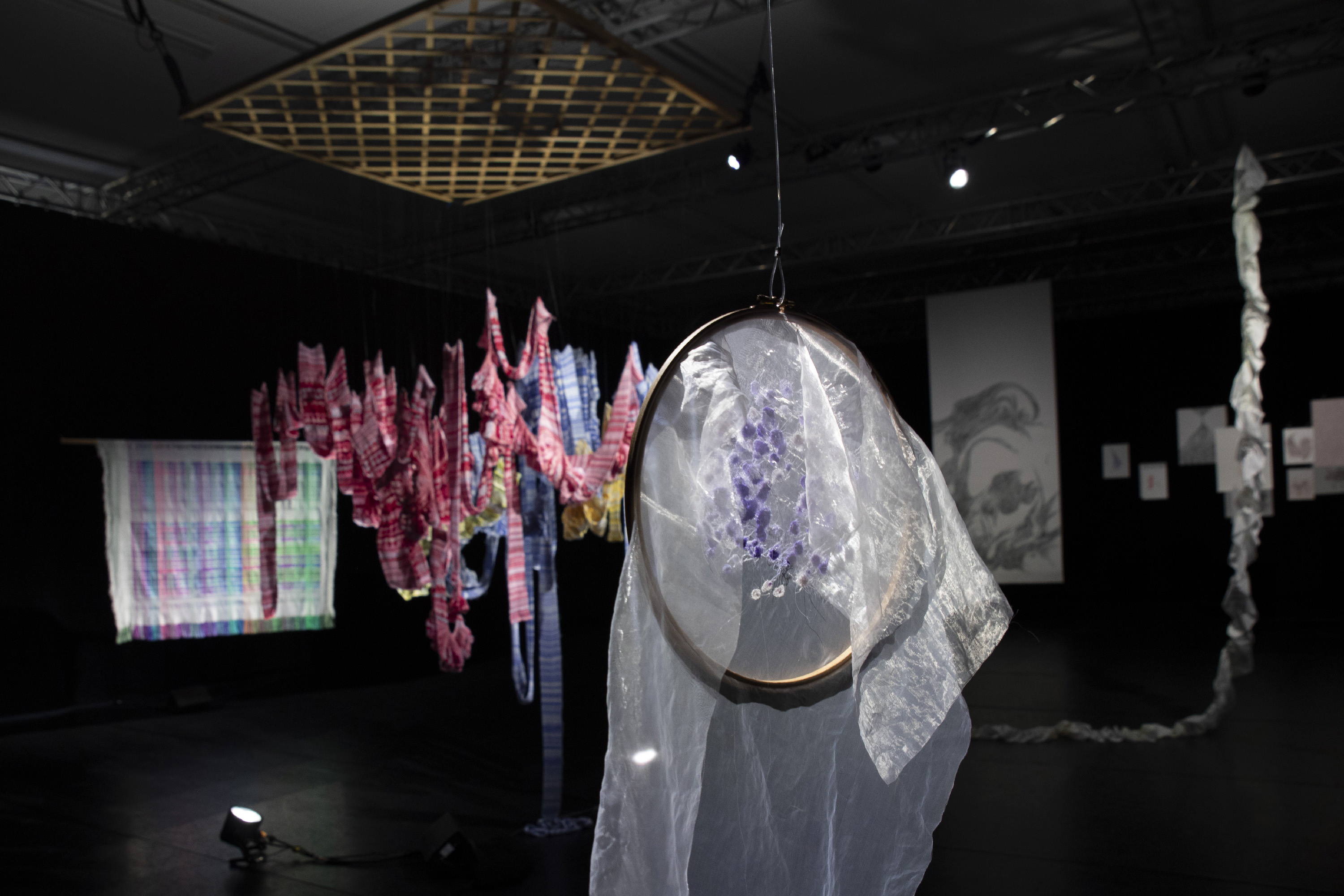
A Textile Study of the Craftsmanship in Biolabs
2026
Installation with four textiles and 4-channel sound:
- The Artist's Fold of the knitted USP1-UAF1 bound to Lys63-linked diubiquitin
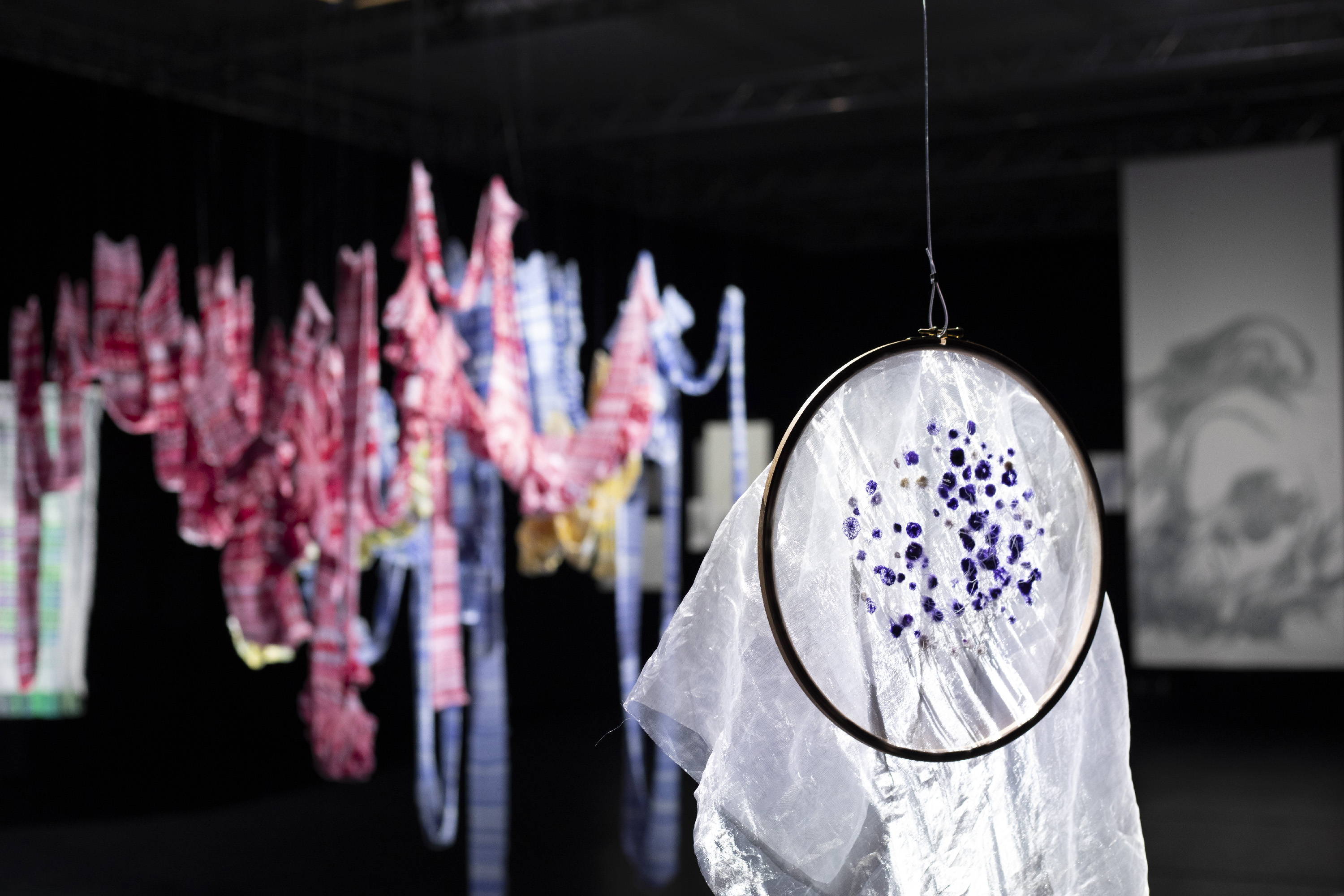
- Embroidered white thread(s) colonies dyed with retired crystal violet previously used in clonogenic assays
- Human body conditioned to Xenopus laevis, performed on a sewing machine
- Weave bindings and wefts interactions sampled in 1536 wells
Biological Wet Lab requires highly skilled craftsmanship. In order to discover the underlying mechanisms of living organisms, many of which are invisible to the human eye, scientists still have to use their human bodies and hands to interact with the complexity and use different techniques to contrast and reveal what is hidden. The hands-on skills of handling samples, planning strategies that would allow us to understand the materiality and vitality, and awareness of the procedural steps, speak much to the similarities with textile making. In this project, each textile installation speaks the craft wisdom from the biological wet lab where the artist had a residency, accompanied by the recordings collected for the conversation between the artist and the scientists about how they deal with the physicalities correlated with the wet lab practices. It is an investigation through making for the shared attention and attitude towards the physical otherness between the biological lab and the crafts.
Collaboration partners: University of Copenhagen - Marta Olivia Santiago and Julien Duxin with support of Ellen Sofia Kakulidis, Mads Meier, Xueyuan Leng; Netherlands Cancer Institute - Kaustav Majumder and Titia Sixma; Lead Discovery Center - Utkarsha Pande, Bert Klebl, and Kathrin Klebl; Leiden University Medical Center - Hồ Mỹ Phúc Võ and Sylvie Noordermeer
Production collaborators: Eindhoven University of Technology Wearable Senses Lab, Femke Vorselen, Milou Voorwinden, Kristina Andersen, EE Labels, Karolina Tomaszewska
This is a project developed through the RepliFate artist residency.
The installation
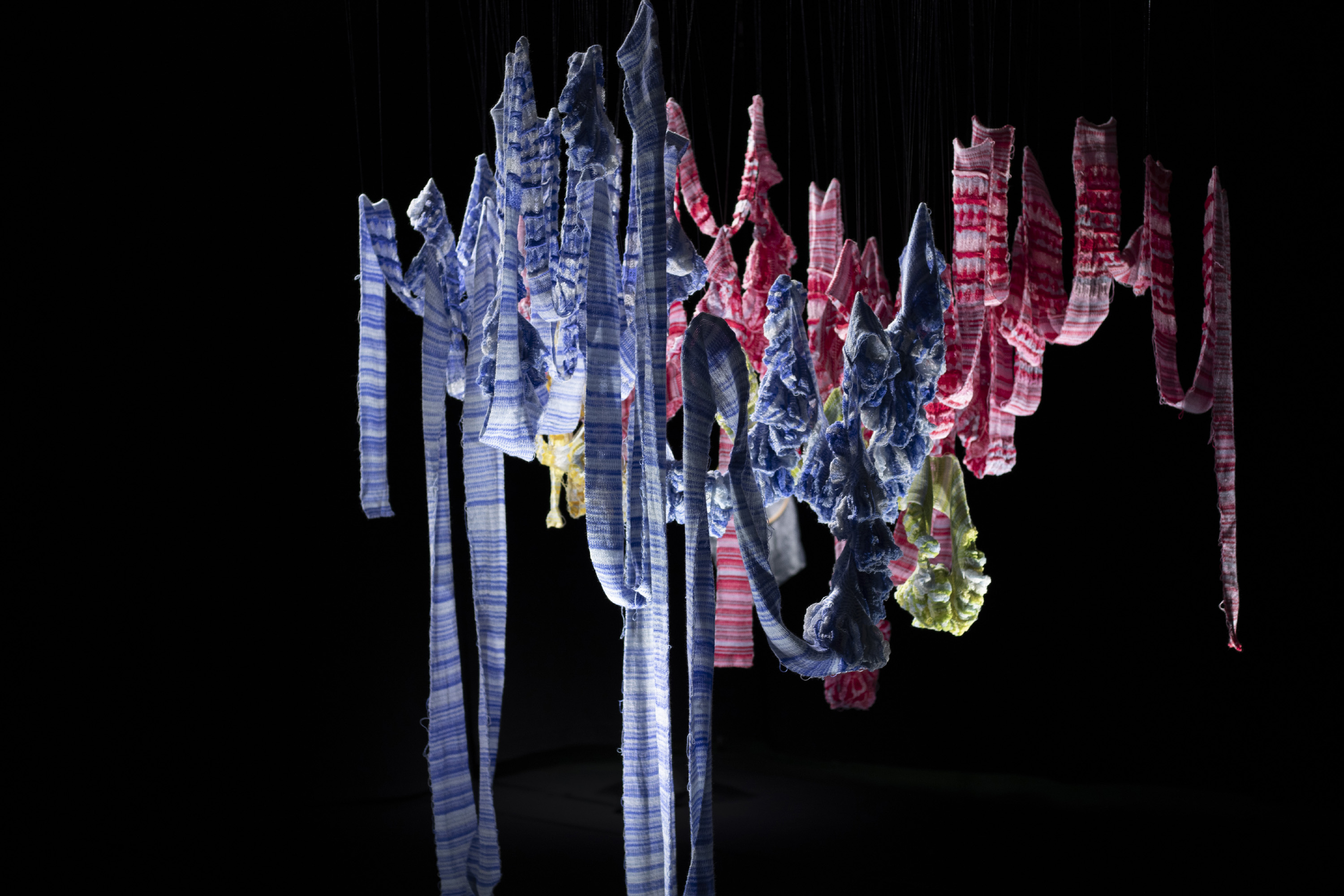
The Artist's Fold of the knitted USP1-UAF1 bound to Lys63-linked diubiquitin. This textile is made through converting the protein structure residue by residue into a structured, colour-coded knit. The colour sequence will allow one to read and find the correspondence amino acid, and the tubes indicade the beta-sheet protein structures, the spirals indicade the protein helices.
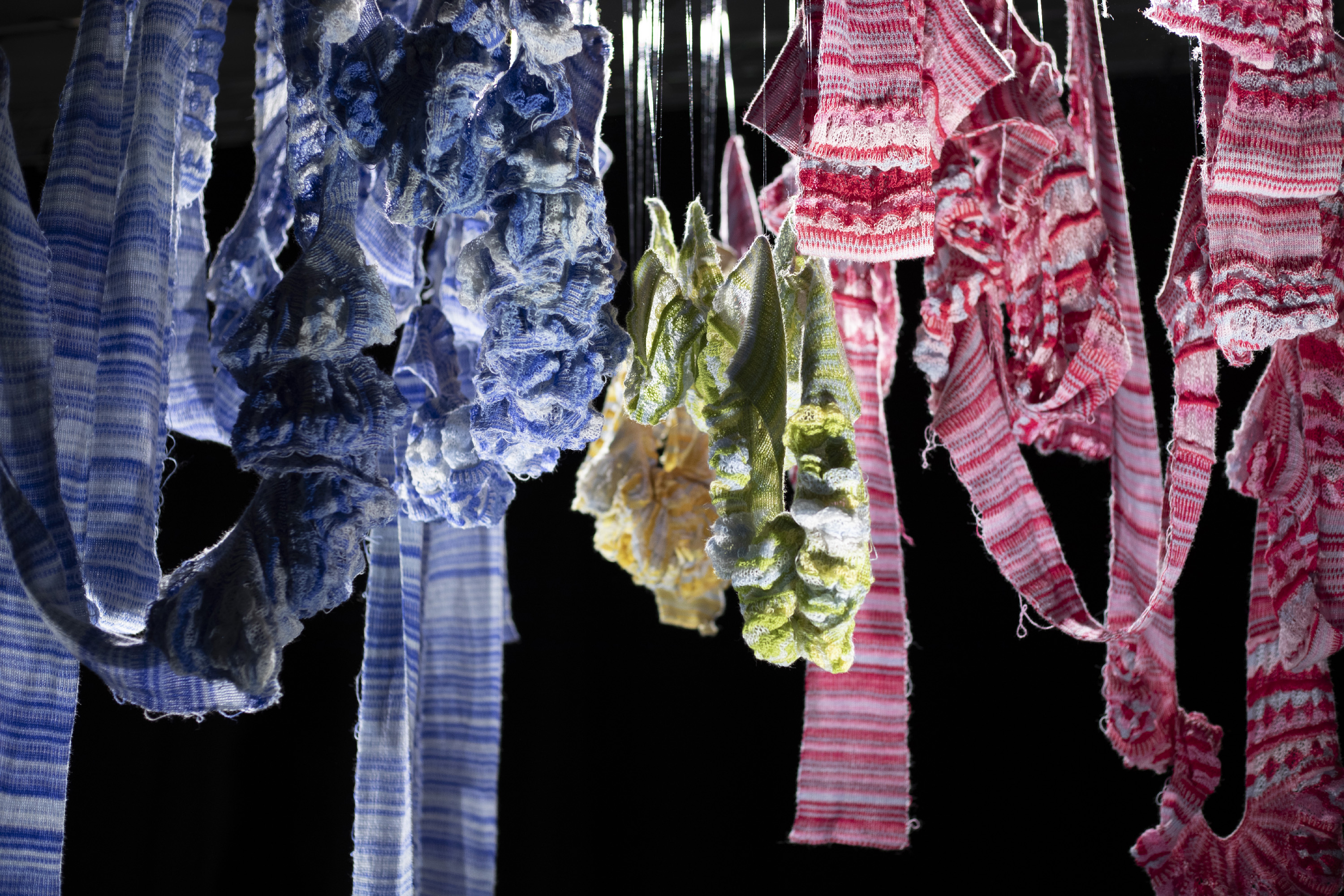
Clost up of The Artist's Fold of the knitted USP1-UAF1 bound to Lys63-linked diubiquitin
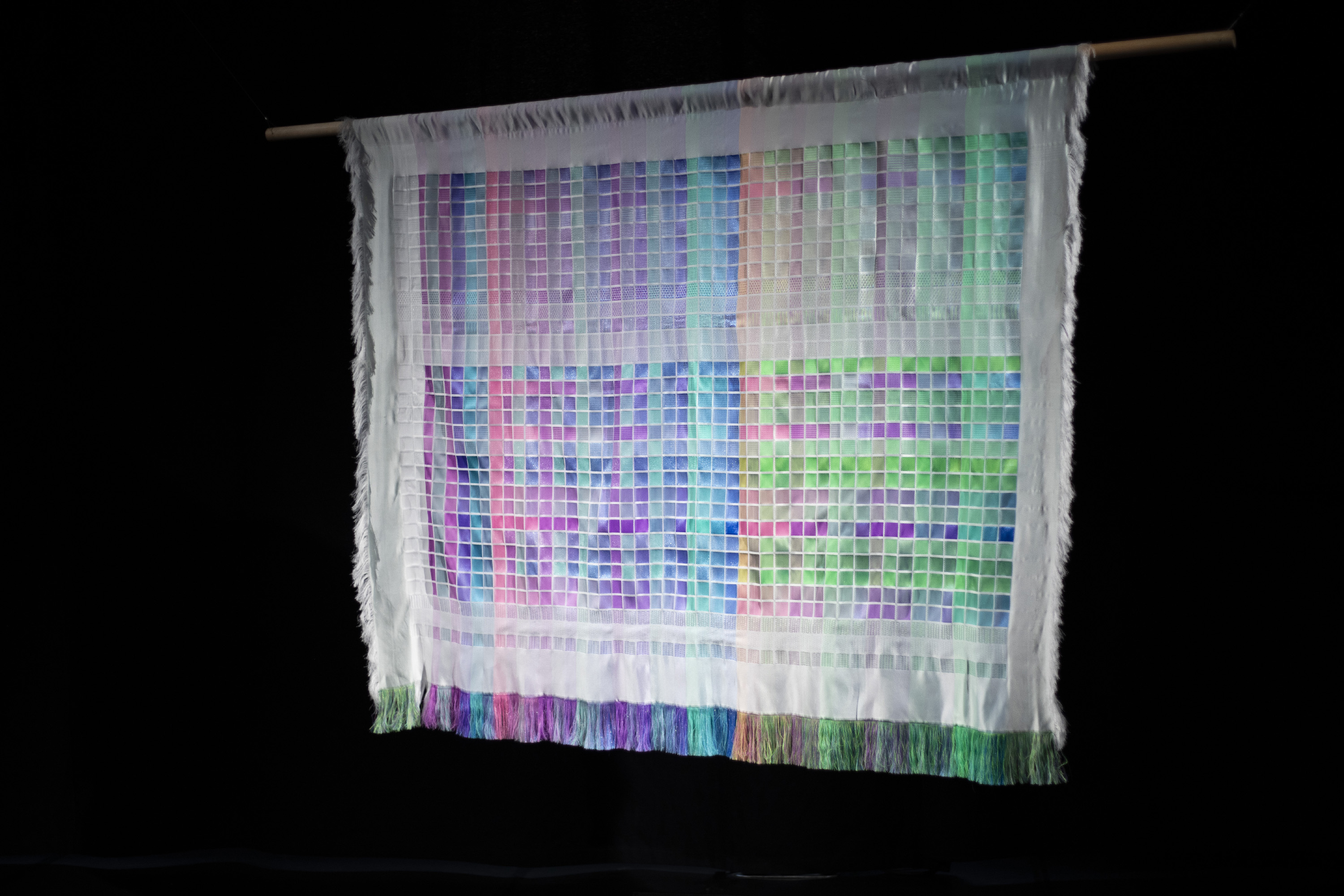
Weave bindings and wefts interactions sampled in 1536 wells. Each row contains the same bindings (structure) while each column is a same set of weft colours. This textile becomes the fabric of test, where its form is adapted from the 1536 wells test plate used in biolabs.
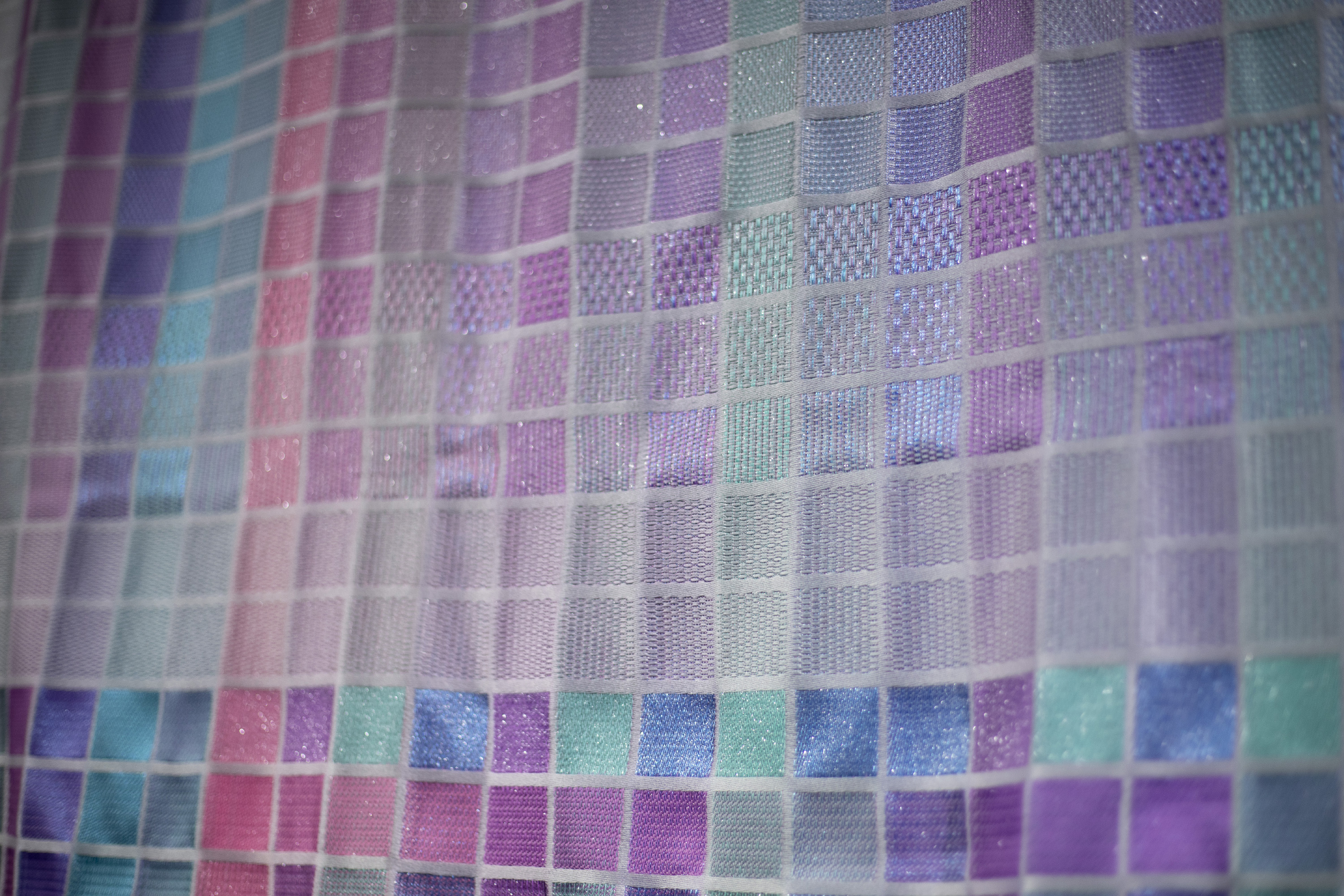
Close up of Weave bindings and wefts interactions sampled in 1536 wells
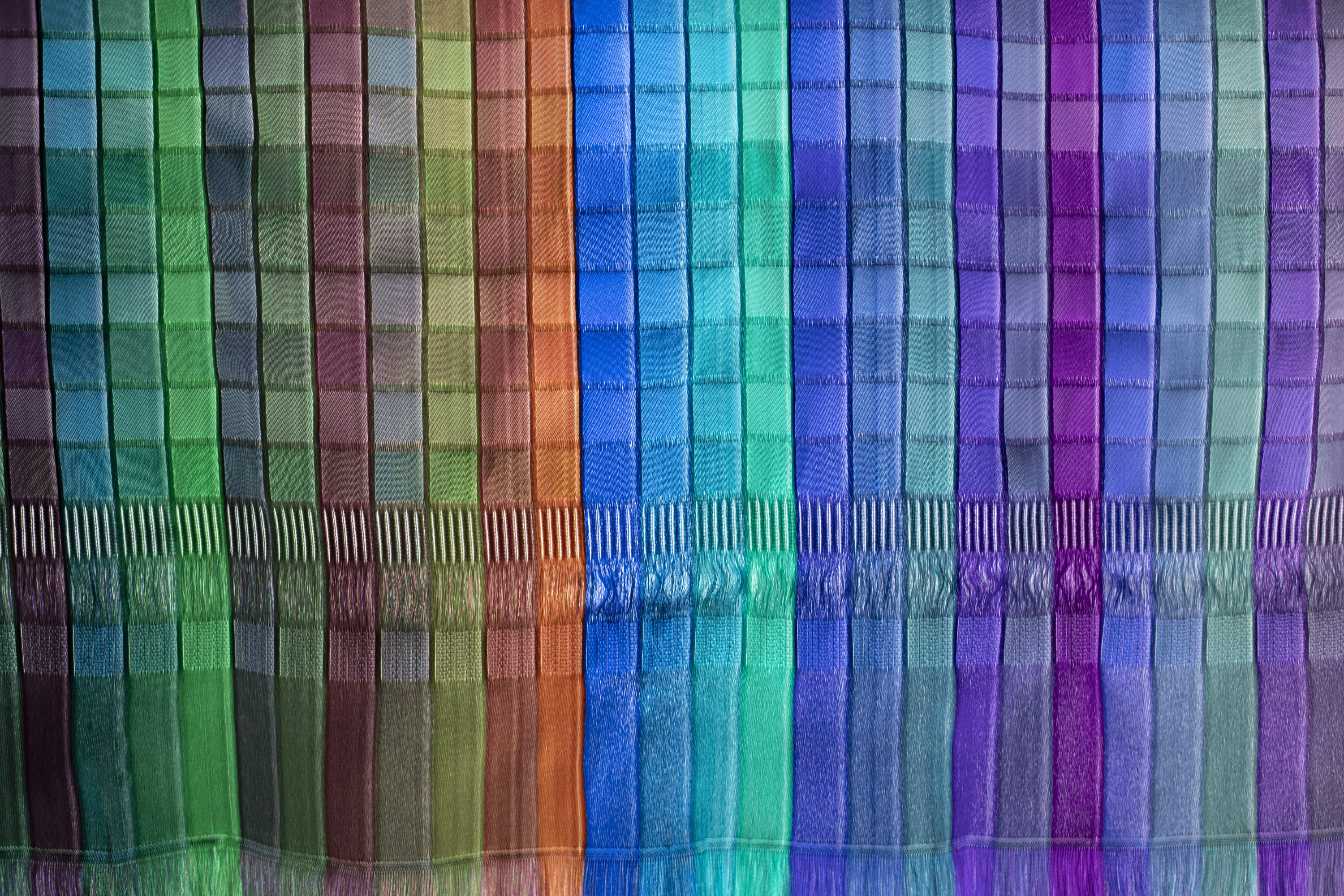
Weave bindings and wefts interactions sampled in 1536 wells, seeing from the back, reveals the true colours of the wefts.
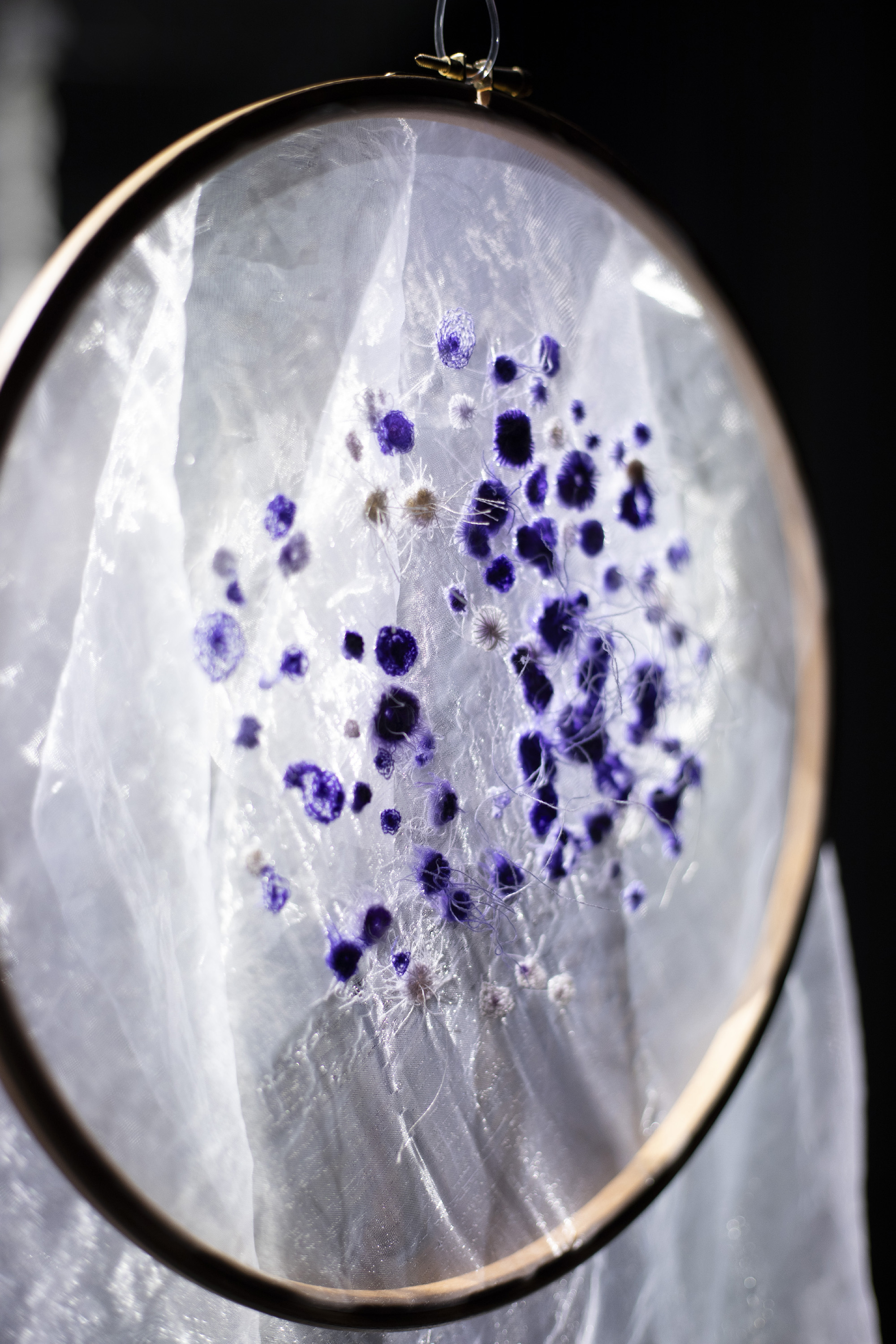
Embroidered white thread(s) colonies dyed with retired crystal violet previously used in clonogenic assays. The embroidery was made through using only white threads, and dyed with the crystal violet solution that was used in clonogenic assays. Because different yarn materials have different affinity to the dye, it shows a gradient of purple.
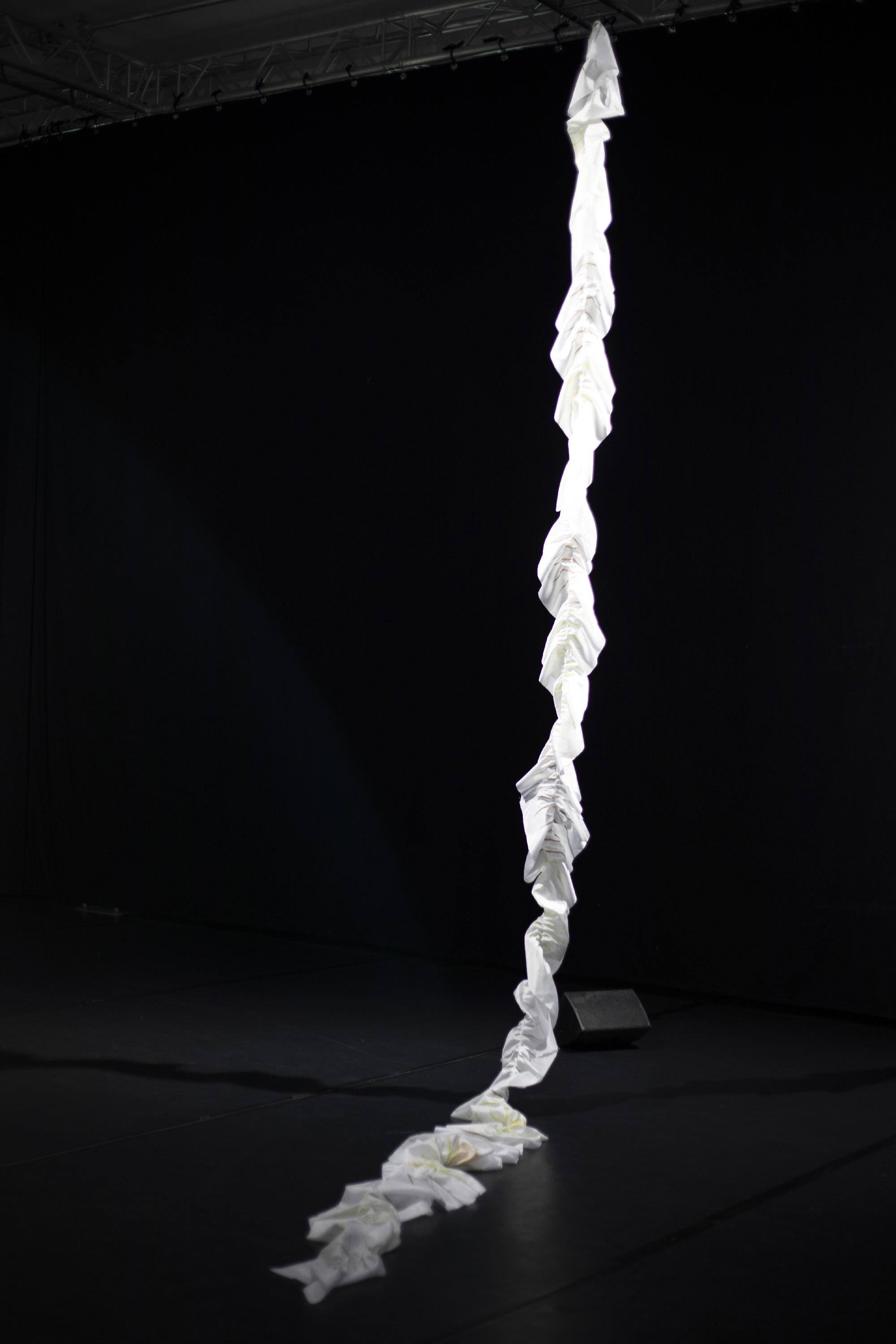
Human body conditioned to Xenopus laevis, performed on a sewing machine.
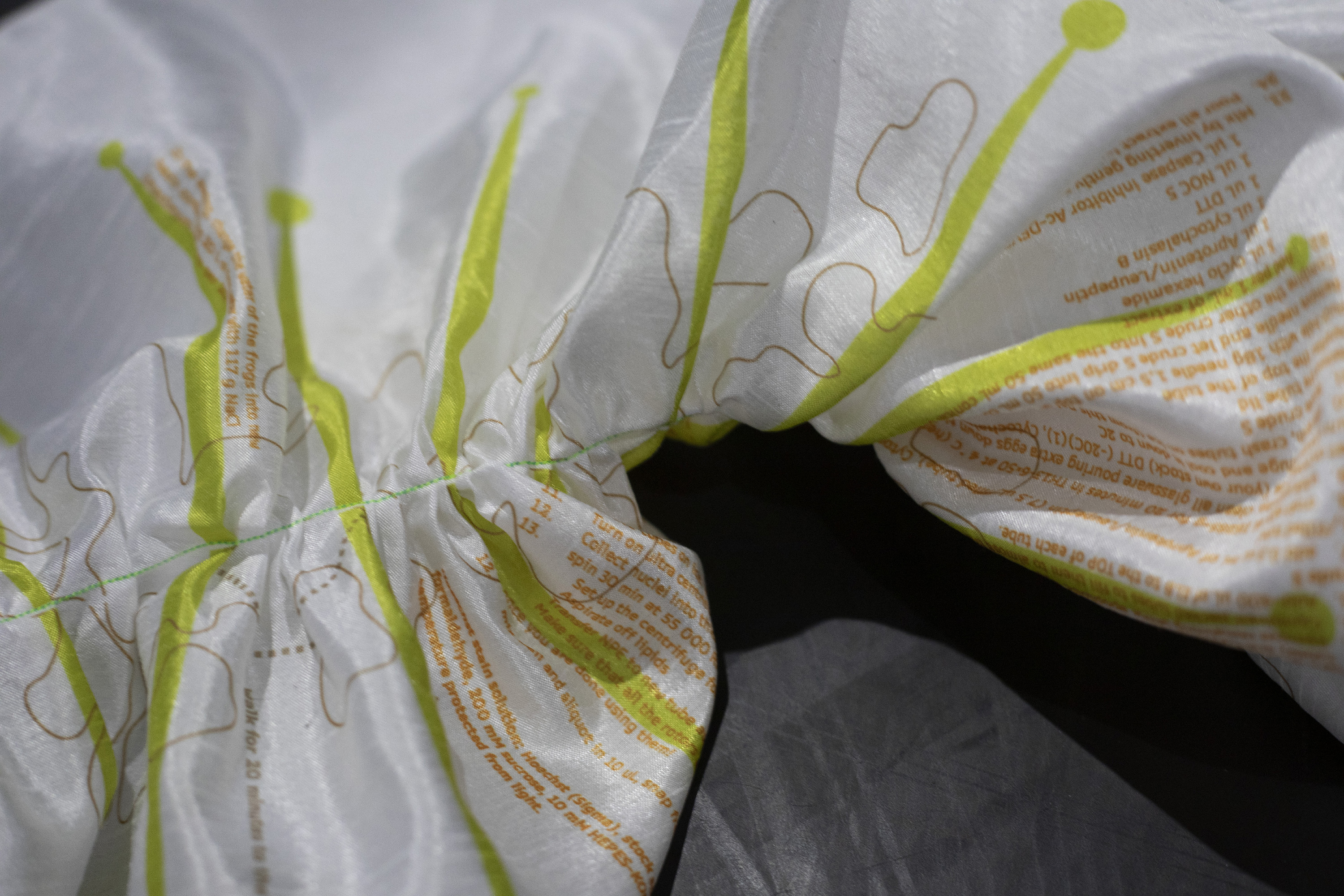
The fabric has a printed timeline of Xenopus egg extraction. The protocol is a tightly timed process with complicated steps that had to be performed around one full week. It is a protocol that has to be closely followed, where on the day of extraction, the scientist will have only few minutes of lunch break, where they eat with a timer.
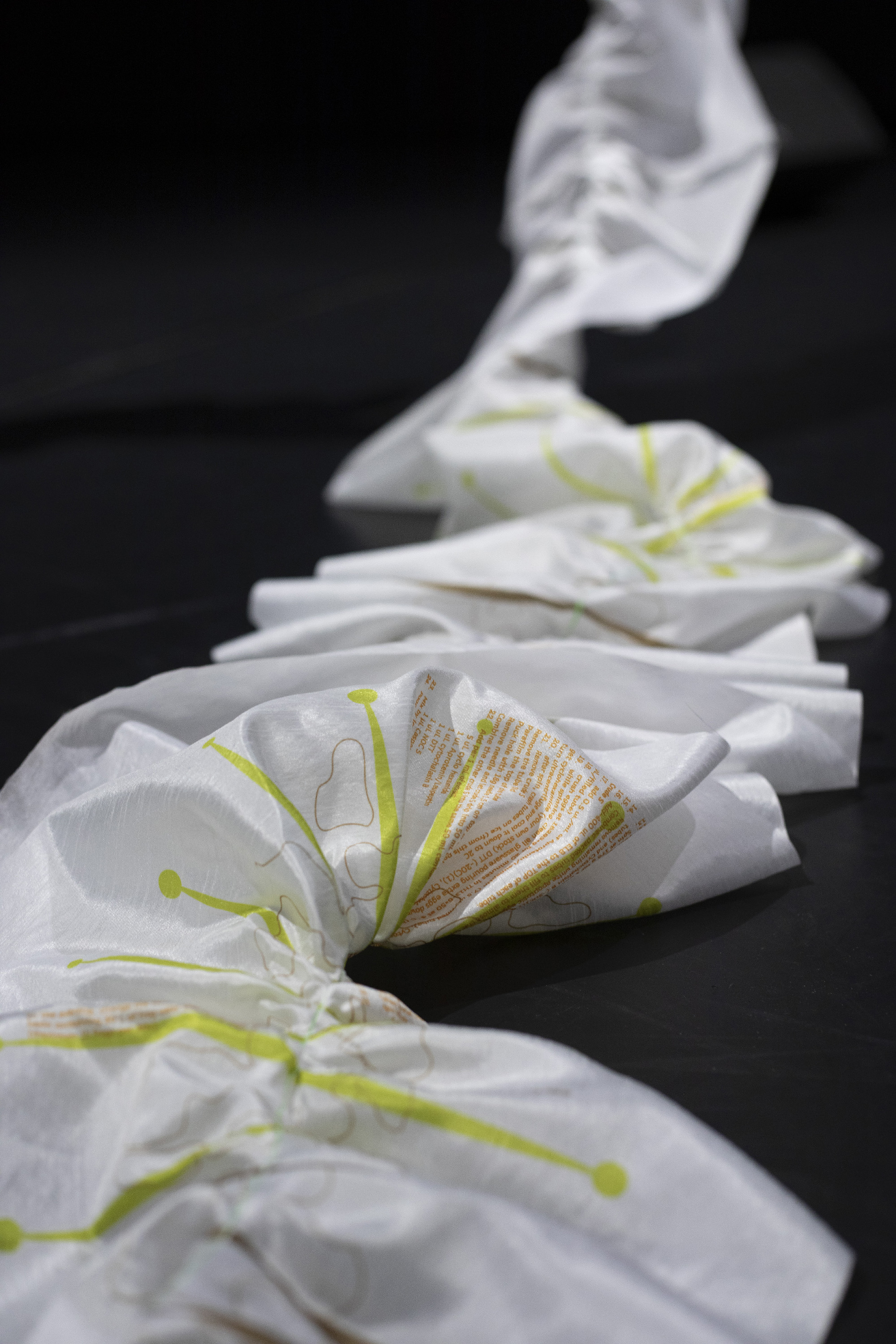
In the textile, a fold is made everytime the protocol requires an action. These folds were made while the fabric runs through the sewing machine with definit speed. These actions conditioned the artist's body to a tight schedule similar to the scientist in egg extraction.