Fiber Genesis
2026
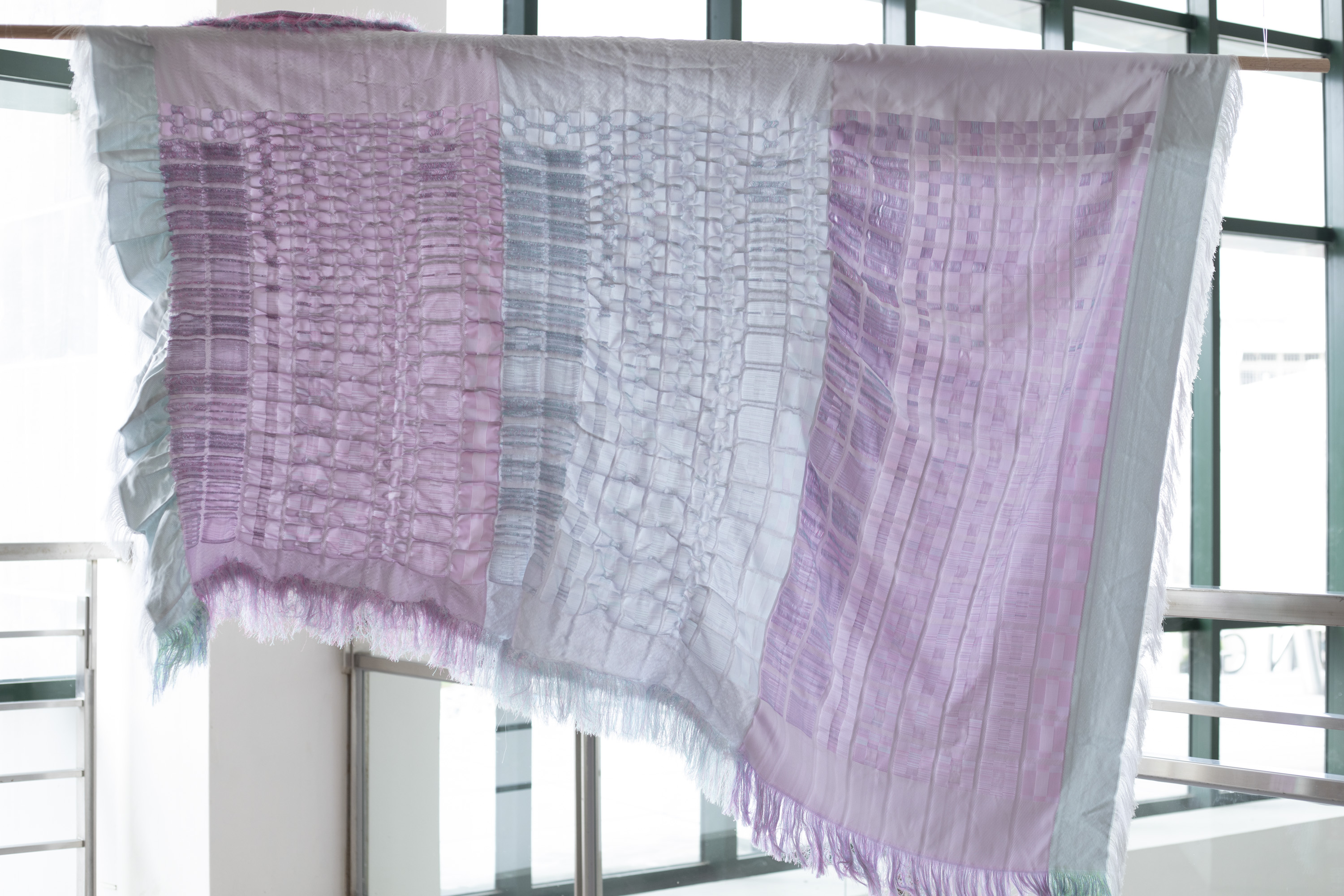
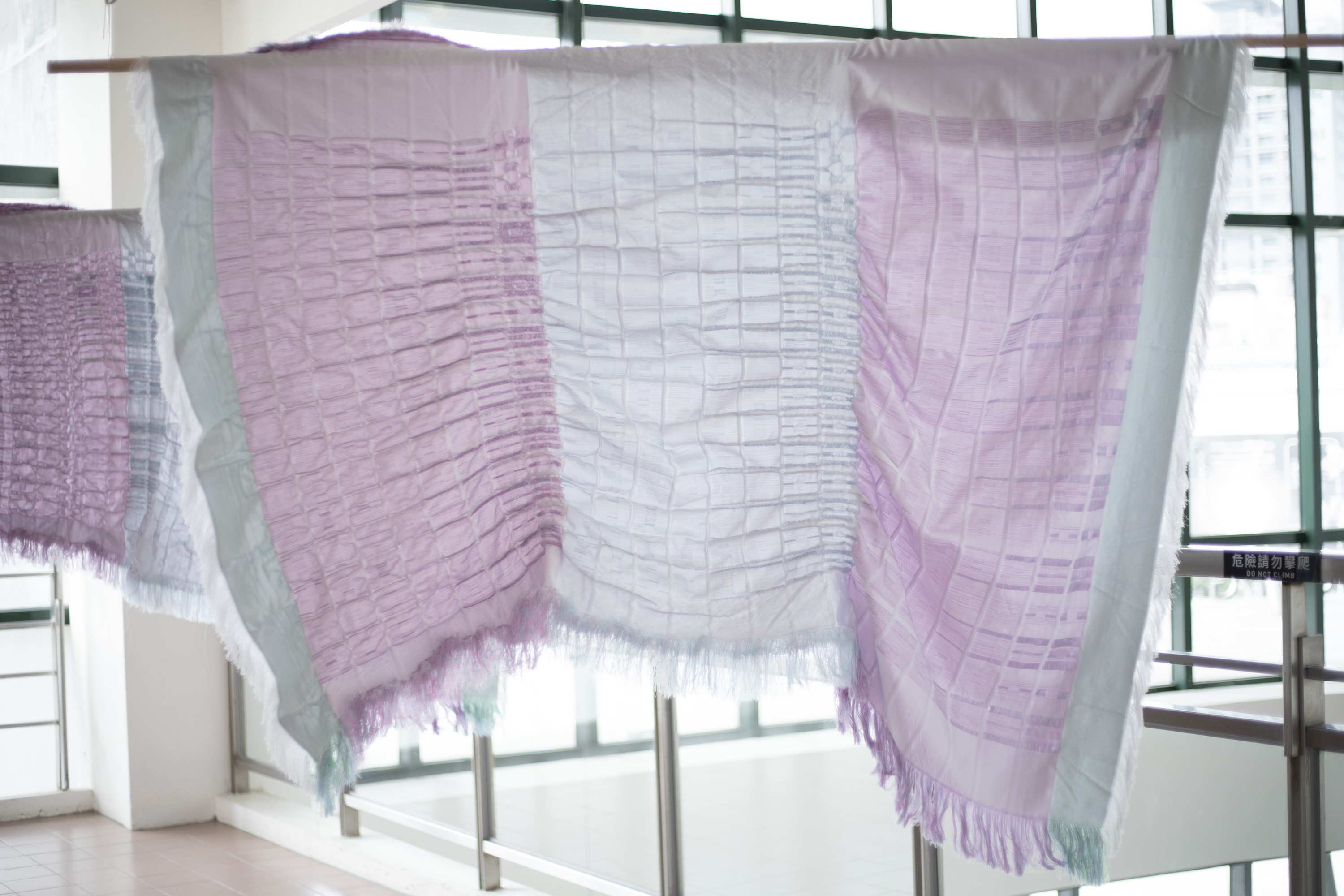
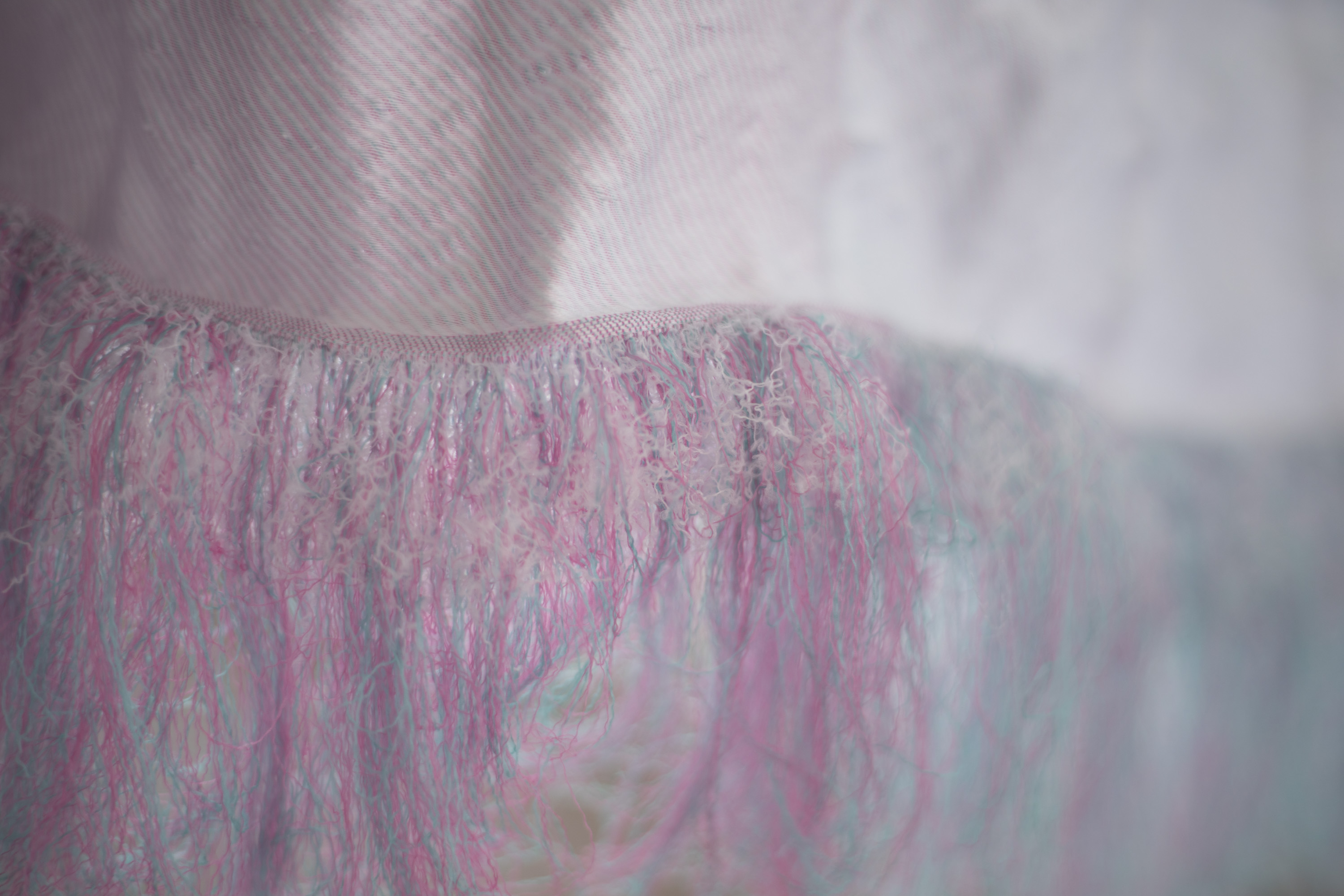
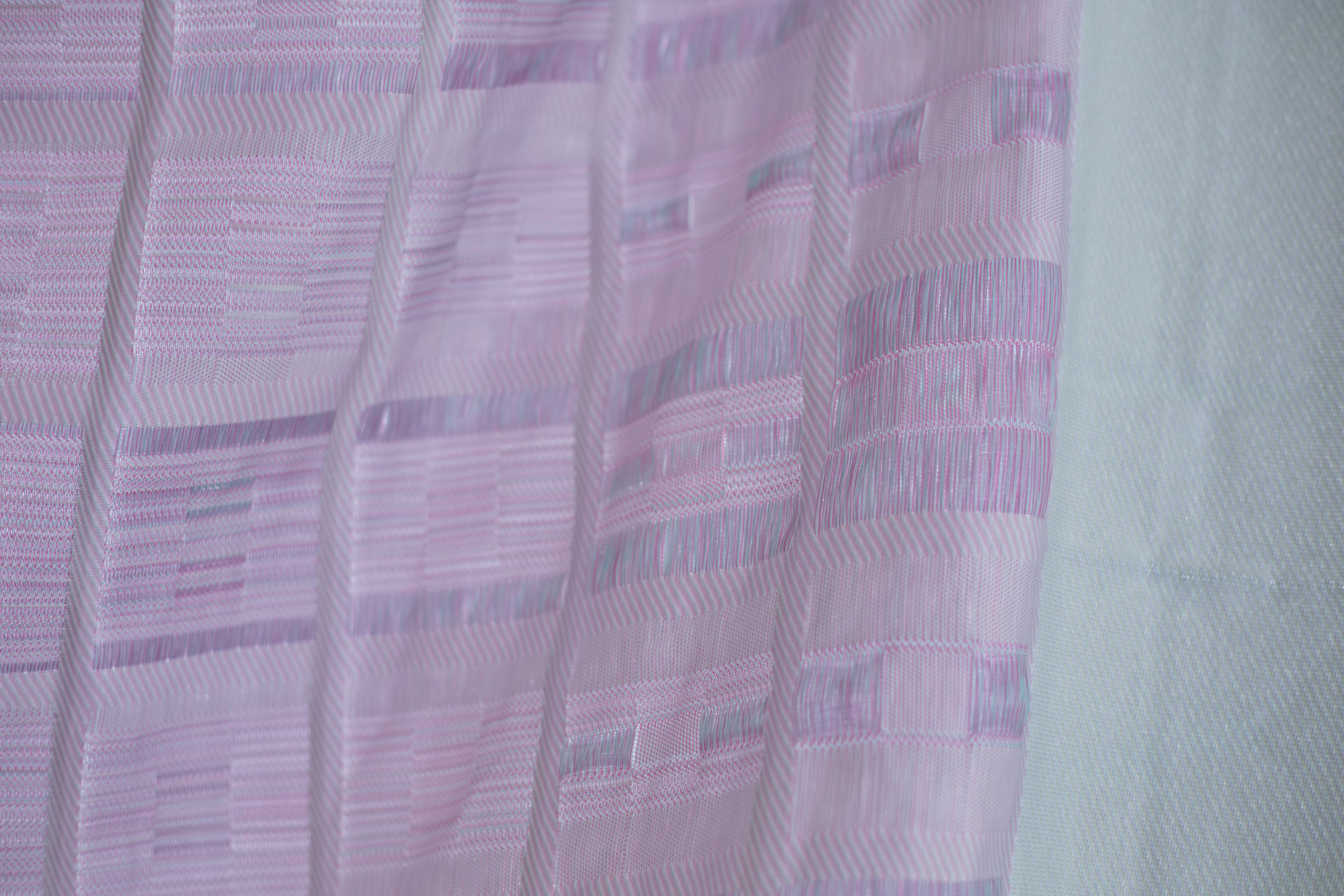
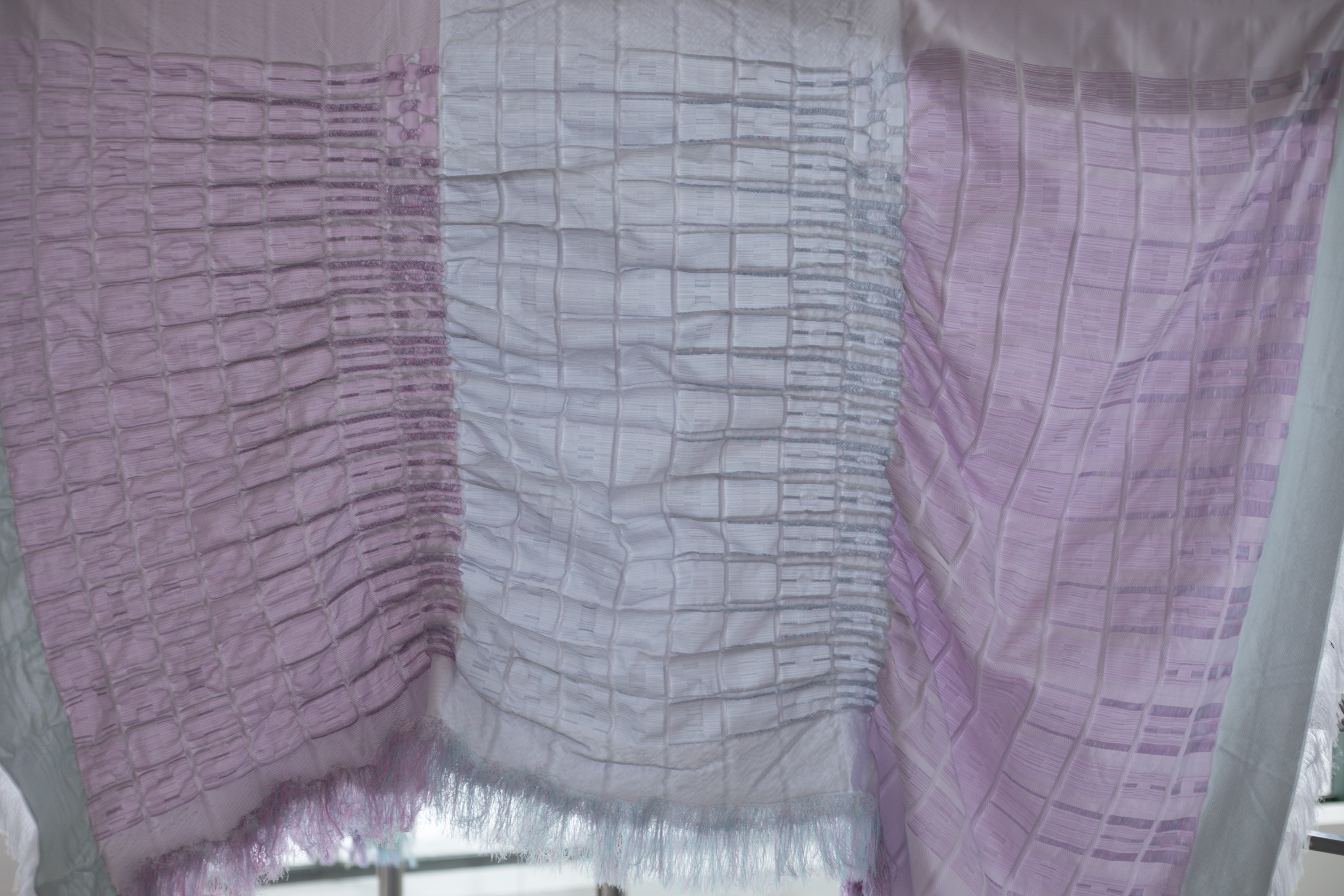
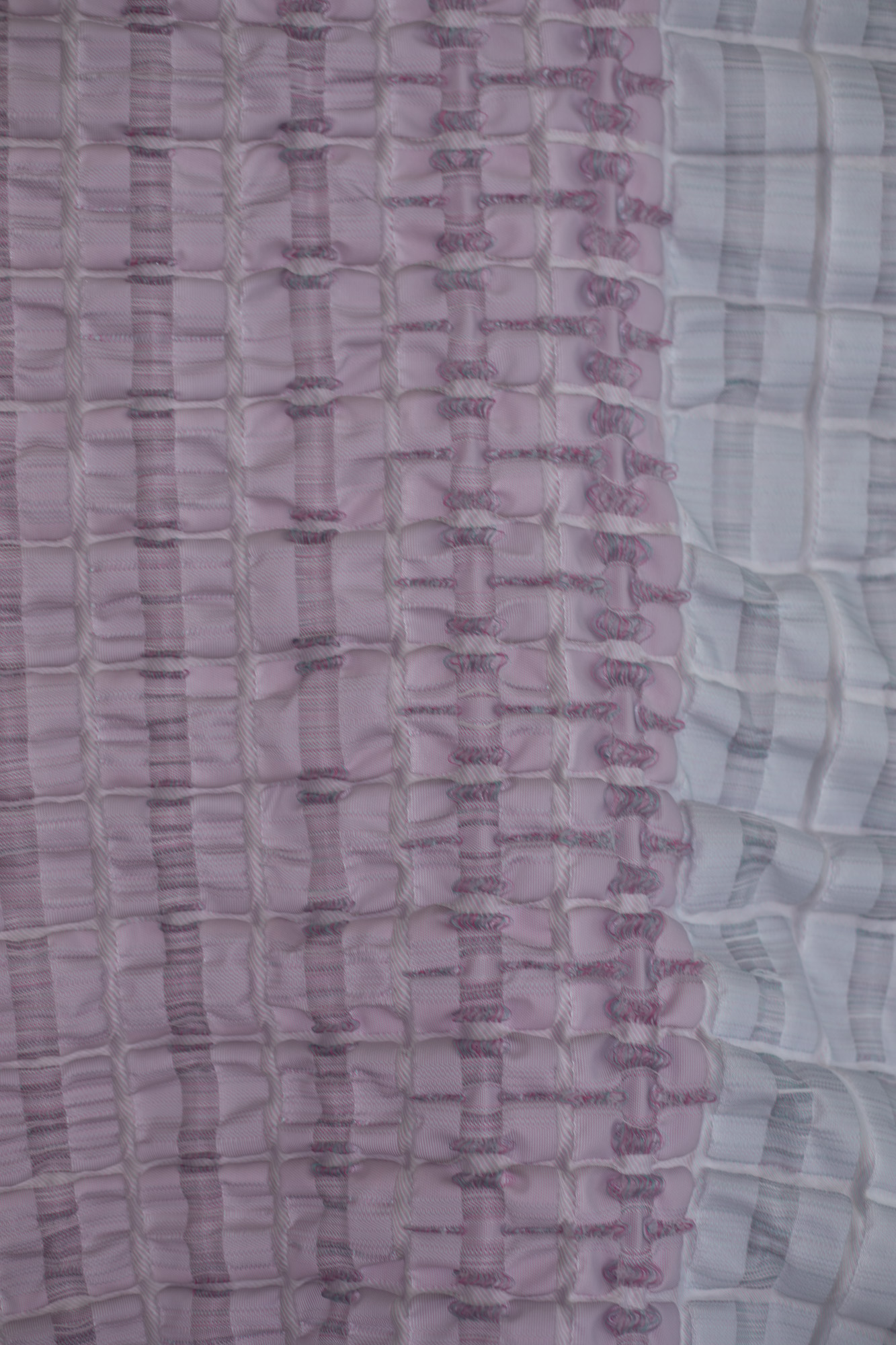
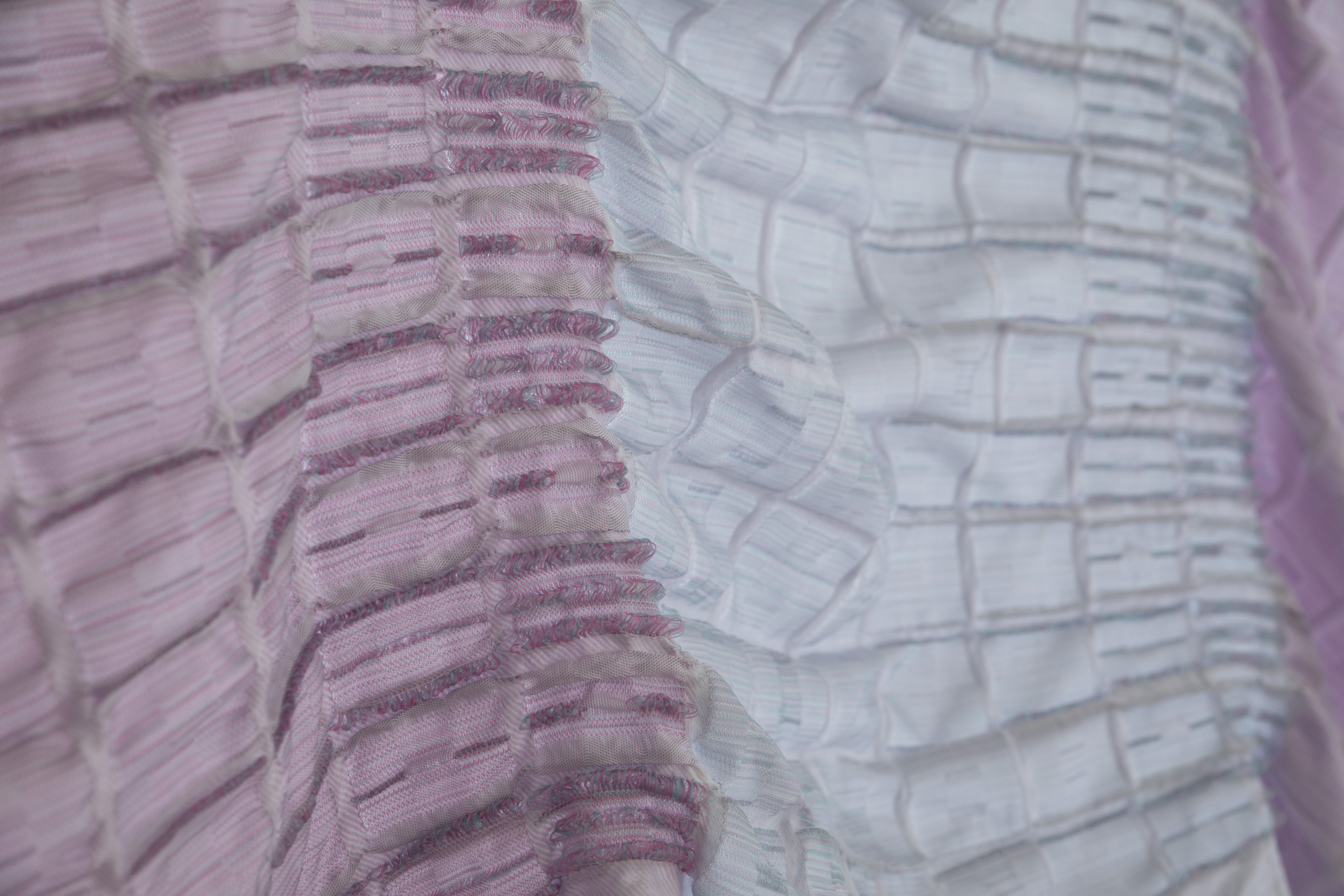
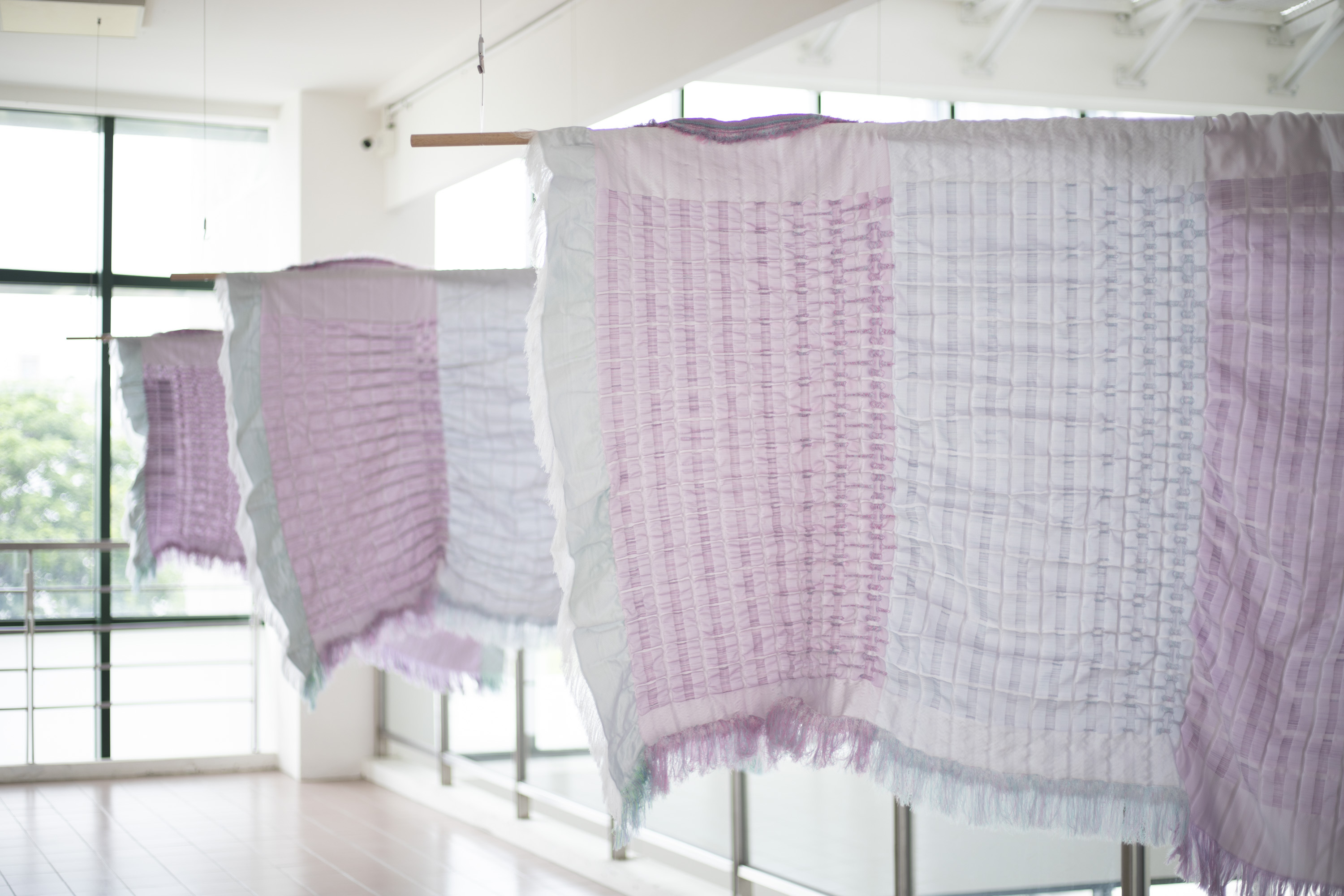
Fiber Genesis (2026) is a project produced on the foundation of my publication “The Woven Mind: Ada Lovelace, Intuitive Computing, and Creative Machines” (Lin & Witkowski, 2025) which suggests seeing the loom as a hybrid computational system – a form of hybrid life that is physical and could compute for open-endedness (Lin et al., 2026). The project consists of three pieces of woven textiles, each contains three sections woven by different sets of weft yarns. The structure within each section is identical, all evolved from applying the chosen Cellular Automata rules to an existing binding (weave structure). It shows the diversity of emerging properties through computation driven by material interactions. This is an example of seeing existing practices (weaving) through a different lens (Artificial Life).
Collaborators:Femke Vorselen, Alyssa Adams, Olaf Witkoskiw, Kristina Andersen
This is an extension of the project "A Textile Study of the Craftsmanship in Biolabs (2026) - Weave bindings and wefts interactions sampled in 1536 wells." Along with the following publications:
- Lin, P.-Y., Adams, A., Vorselen, F., Andersen, K., & Witkowski, O. (2026). Weaving Cellular Automata: Open-Endedness and Creativity through Hybridising Computation. ALIFE 2026: Proceedings of the 2026 Artificial Life Conference, 21. https://doi.org/10.1162/ISAL.a.947
- Lin, P.-Y., & Witkowski, O. (2025). The Woven Mind: Ada Lovelace, Intuitive Computing, and Creative Machines. ALIFE 2025: Ciphers of Life: Proceedings of the Artificial Life Conference 2025. https://doi.org/10.1162/ISAL.a.837
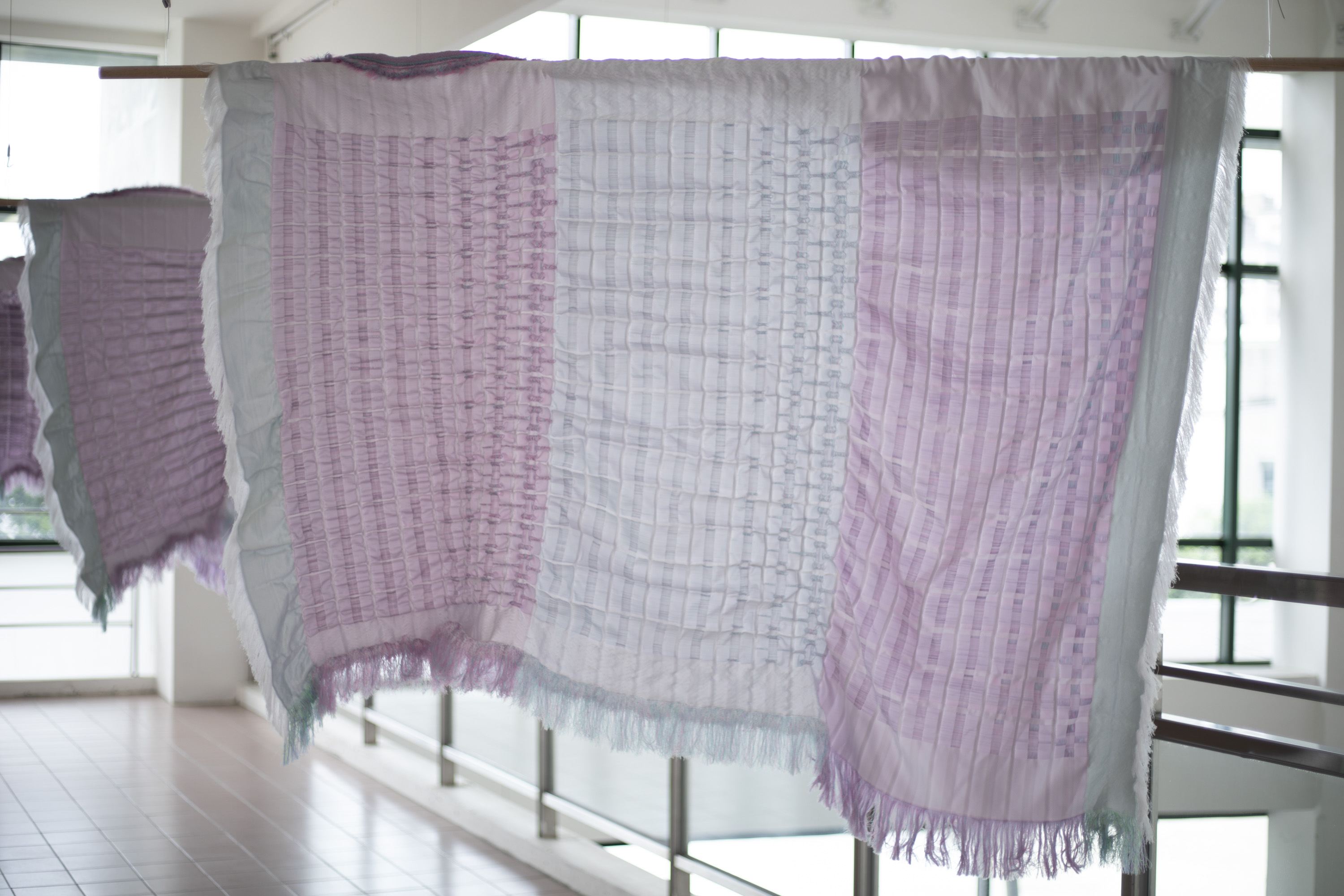
Overview of the three works. Each piece contains 3 sections, in each section there are 128 bindings, each section has a different yarn combination. Each smaller box of the pattern contains a version of Celullar Automata (CA) mutated pattern. In which we can see different CA rules will unfold differently. Each column in the front-most textile has been mutated with one selected CA rule, showing how different CA rules also have emergent complexities.